
Overview
- Primary topic
- Glass deflection calculator
- Engineering basis
- SLS deflection
- Review status
- Project-specific verification required
What Affects Deflection
Deflection depends on pane dimensions, span, glass thickness, support condition, load magnitude, glass build-up, and laminated glass assumptions.
SLS Review
Serviceability checks are normally reviewed separately from ULS stress checks because a pane can be strong enough but still too flexible for the project brief.
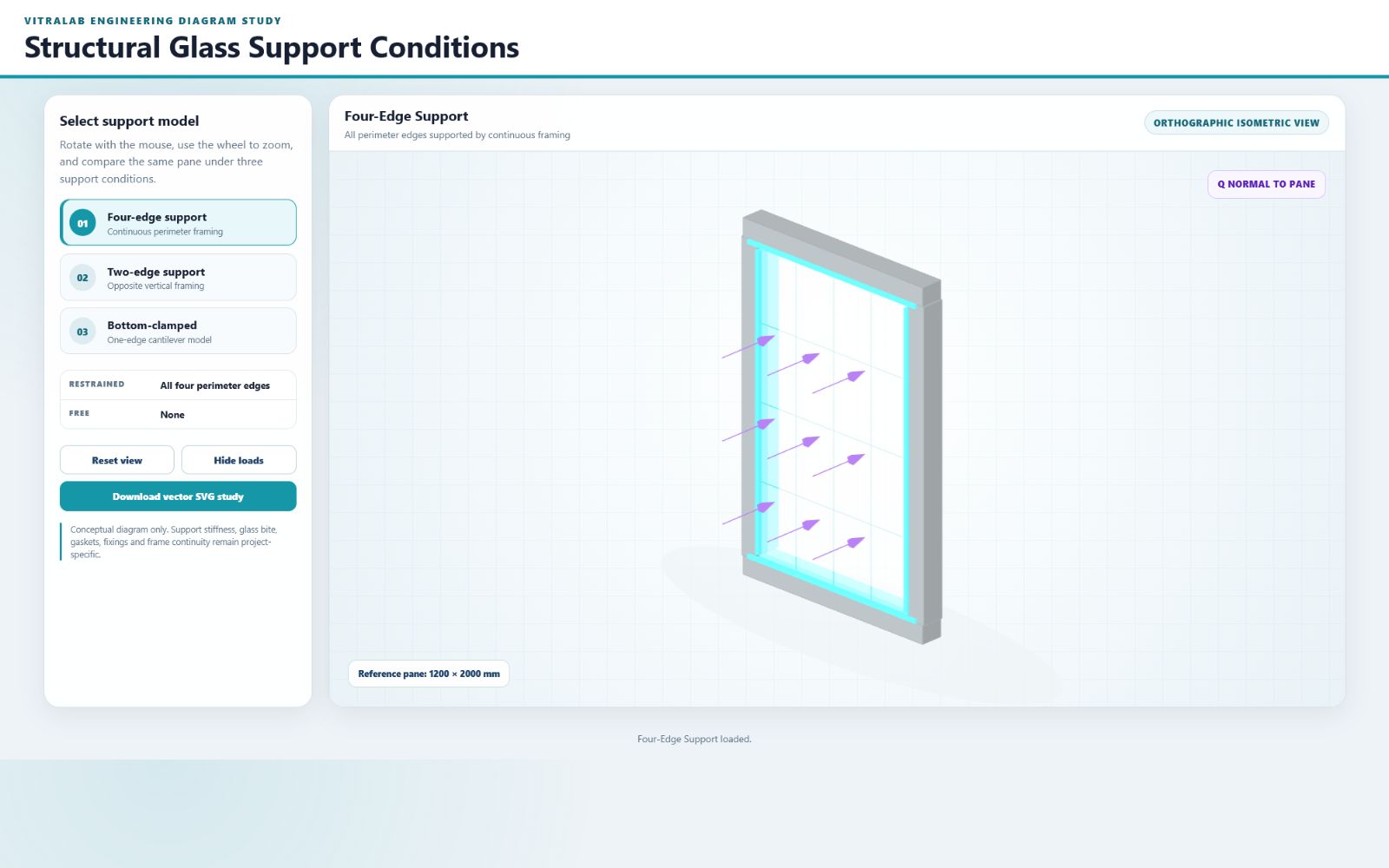 Interactive engineering guide
Structural Glass Support Conditions
Compare four-edge, two-edge and bottom-clamped glass support models in an interactive isometric view.
View support models
Interactive engineering guide
Structural Glass Support Conditions
Compare four-edge, two-edge and bottom-clamped glass support models in an interactive isometric view.
View support models
Deflection Checks
Deflection Limits
The acceptable limit comes from the applicable design basis, project specification and glazing-system requirements. A numerical limit should not be selected only because it produces a passing result; the engineer must confirm the criterion and the span to which it applies.
Support Conditions
Four-edge, two-edge, and one-edge support conditions can produce very different deflected shapes and governing spans. The support model should match the real framing detail.
Wind Load and Facade Glass
For structural glazing and facade panels, wind pressure or suction can govern deflection. The same pane may pass stress checks while still needing a serviceability review.
Engineering Use
Laminated Glass Deflection
Laminated glass behavior depends on ply thickness, interlayer assumptions, load duration, and the design method used for the project.
Using VitraLab
Open the glass deflection calculator, enter the pane size, build-up, support condition and actions, then review the SLS deflection, selected limit, utilization, warnings and project assumptions.
Example Deflection Checks
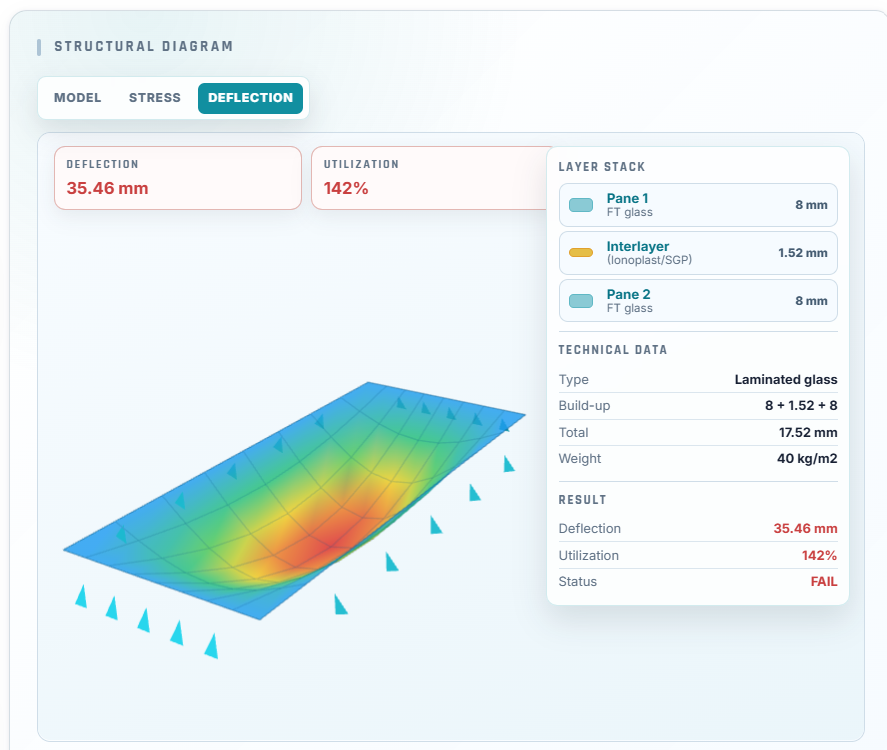
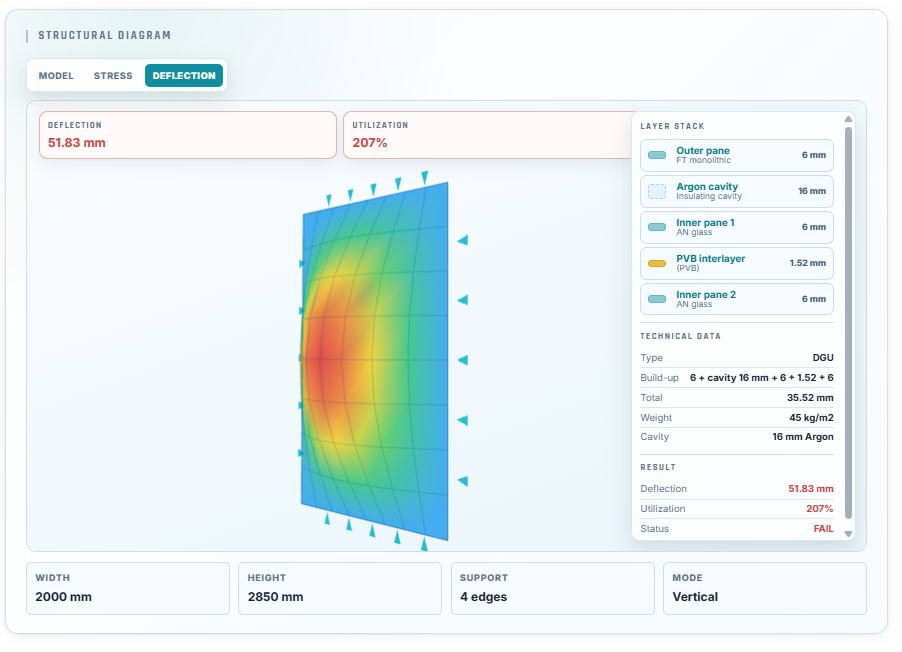
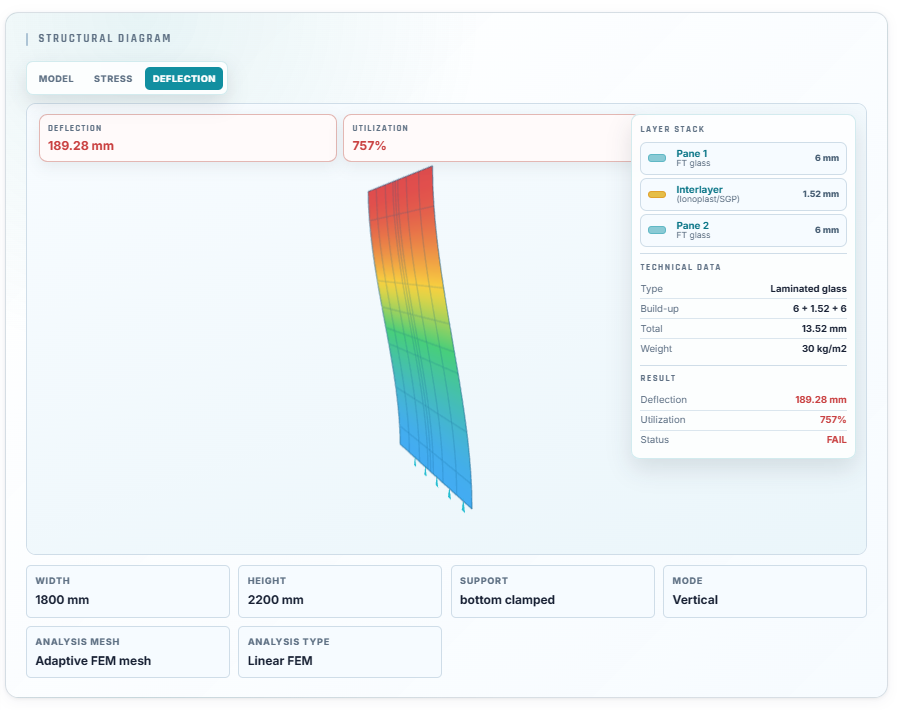
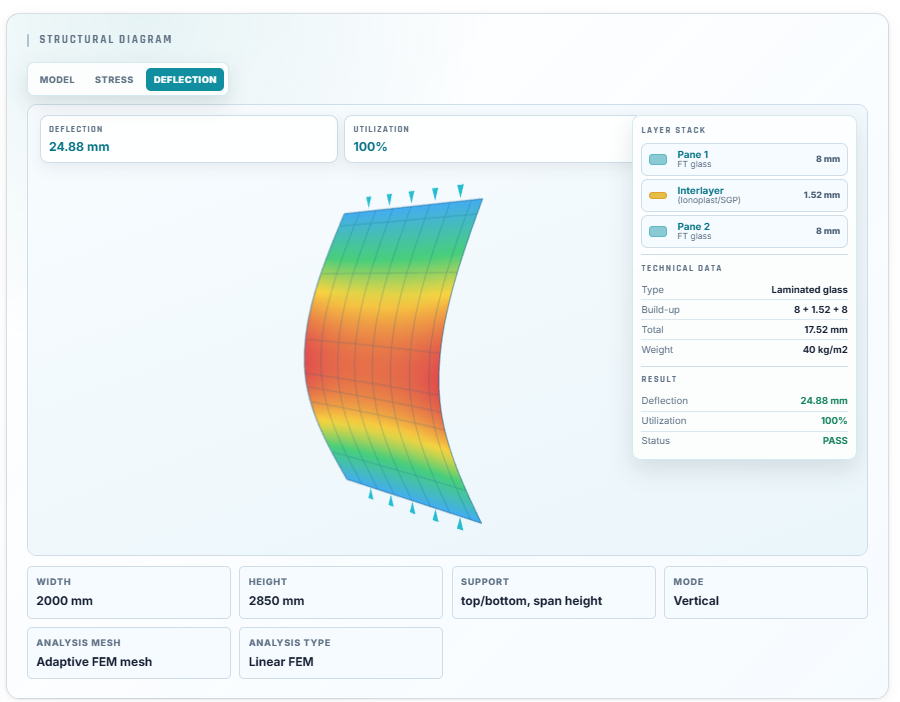
Example VitraLab deflection result images for horizontal laminated glass, vertical DGU glass, and one-edge supported balustrade glass.
Swipe horizontally to view more figures
Frequently Asked Questions
Why is glass deflection important?
Deflection affects appearance, movement, drainage, comfort, sealant behavior, and project serviceability requirements.
Can glass pass stress but fail deflection?
Yes. A pane can have acceptable strength utilization while still exceeding the selected serviceability deflection limit.
What is an acceptable glass deflection limit?
There is no single limit suitable for every glazing system. Use the applicable standard, project specification and support-span definition, then confirm compatibility with framing, seals, drainage, appearance and adjacent construction.
Which inputs matter most for deflection?
Span, thickness, support type, load magnitude, aspect ratio, and laminated glass assumptions are usually the most important inputs.
Engineering content is prepared and maintained by VitraLab Engineering. Worked examples show how the current calculator treats a defined case; they do not replace project-specific verification.